
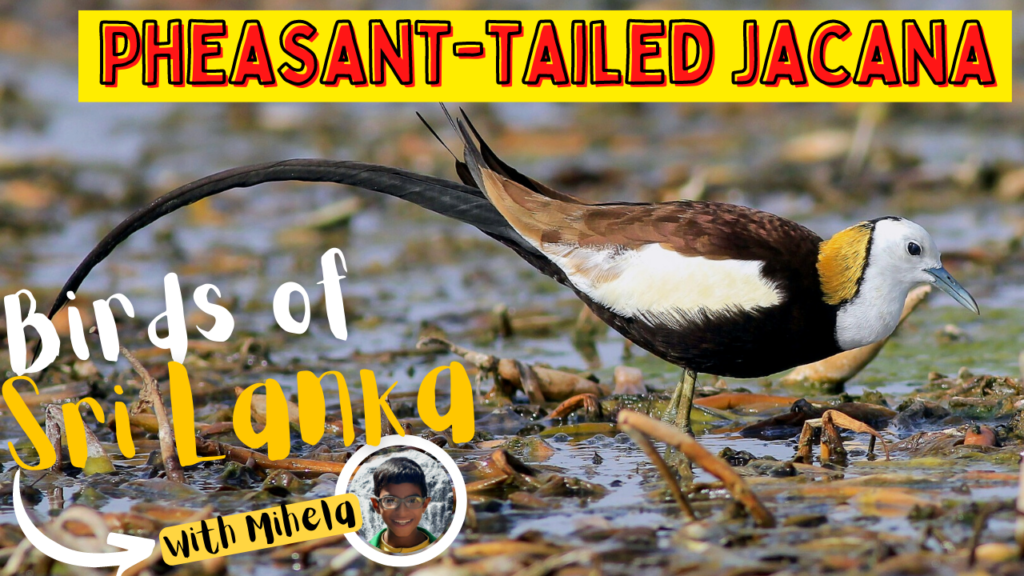
PHEASANT-TAILED JACANA | සැවුල්-පෙඳ දියසෑනා
LOCAL NAMES
- සැවුල්-පෙඳ දියසෑනා, බළල් සේරා, Sawulpenda diyasena, Balal sera, जल-कपोत, giacana, জাকানা, જાકાના, ജക്കാന, ஜக்கனா, జాకానా, দলমৰা, নেউ পিপি, જળમાંજાર, કથ્થાઈ જળમાંજાર, पिहो, ಫೆಸೆಂಟ್-ಬಾಲದ ಜ್ಯಾಕನ, വാലൻ താമരക്കോഴി, कमळपक्षी, पाणमोर, जलमयूर, जलअप्सरा, जलकपोत, जलमंजोर, நீளவால் தாழைக்கோழி
- Assamese দলম’ৰা
- Bangla জলময়ূর
- Chinese 水雉
- Chinese (SIM) 水雉
- Czech ostnák bažantí
- Dutch Waterfazant
- English Pheasant-tailed Jacana
- English (United States) Pheasant-tailed Jacana
- French Jacana à longue queue
- French (French Guiana) Jacana à longue queue
- German Fasanenblatthühnchen
- Hebrew ז’קנה זנבתנית
- Icelandic Fasanjóki
- Indonesian Burung-sepatu teratai
- Japanese レンカク
- Korean 물꿩
- Malayalam വാലൻ താമരക്കോഴി
- Marathi लांब शेपटीचा कमळपक्षी
- Norwegian fasanbladhøne
- Odia କାକୁଭ
- Persian جاکانای دم قرقاولی
- Polish długoszpon chiński
- Russian Фазанохвостая якана
- Serbian Fazanorepa jakana
- Slovak jakana bažantia
- Spanish Jacana Colilarga
- Spanish (Spain) Jacana colilarga
- Swedish fasanjaçana
- Thai นกอีแจว
- Turkish Sülün Kuyruklu Jakana
- Ukrainian Якана довгохвоста
DESCRIPTION
The pheasant-tailed jacana (Hydrophasianus chirurgus) is a jacana in the monotypic genus Hydrophasianus. Like all other jacanas, they have elongated toes and nails that enable them to walk on floating vegetation in shallow lakes, their preferred habitat. They may also swim or wade in water reaching their body while foraging mainly for invertebrate prey. They are found in tropical Asia from Yemen in the west to the Philippines in the east and move seasonally in parts of their range. They are the only jacanas that migrate long distances and have different non-breeding and breeding plumages. The pheasant-tailed jacana forages by swimming or by walking on aquatic vegetation. Females are larger than males and are polyandrous, laying several clutches that are raised by different males in their harem.