
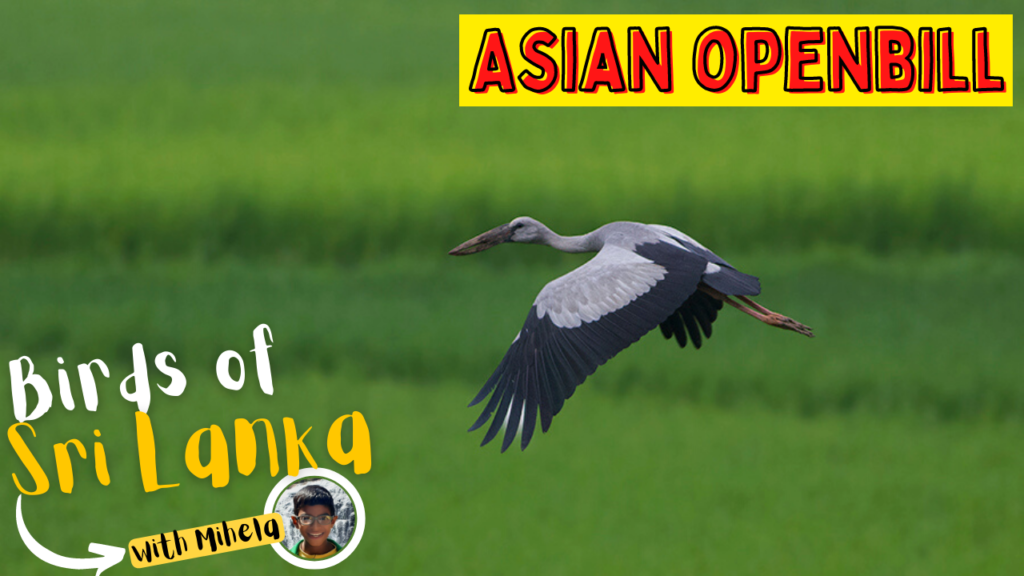
ASIAN OPENBILL | විවරතුඩුවා | Openbill Stork
LOCAL NAMES
- Wiwara Thiduwa, විවරතුඩුවා, Bellan Koka, බෙල්ලන් කොකා, ओपनबिल, திறந்த பில், ओपनबिल, ഓപ്പൺബിൽ, খোলা বিল, শামুকভঙা, এশীয় শামুকখোল, শামখোল, শামুকভাঙা, गंगला, डोकर, ફાટીચાંચ ઢોંક, ગુગળા, गुंग्ला, घुंगिल, घोंघिल, ಬಾಯ್ಕಳಕ ಕೊಕ್ಕರೆ, ചേരാക്കൊക്കൻ, मुग्धबलाक, उघडचोच करकोचा, घुँगीफोर गरुड, ଗେଣ୍ଡାଳିଆ, शंबूक भंजन, शिथिल हनु बक, நத்தை குத்தி நாரை, அகலவாயன்
- Assamese শামুকভঙা
- Bangla শামুকখোল
- Bulgarian Азиатски цепкоклюн щъркел
- Chinese (SIM) 钳嘴鹳
- Czech zejozob asijský
- Dutch Indische Gaper
- English Asian Openbill
- English (Kenya) Asian Open-billed Stork
- English (United States) Asian Openbill
- Finnish aasianrakonokka
- French Bec-ouvert indien
- French (French Guiana) Bec-ouvert indien
- German Silberklaffschnabel
- Gujarati ફાટીચાંચ ઢોંક
- Icelandic Glufustorkur
- Indonesian Bangau nganga
- Japanese スキハシコウ
- Malayalam ചേരാക്കൊക്കൻ
- Marathi गोगल्याफोड्या करकोचा
- Norwegian asiagapenebb
- Odia ଗେଣ୍ଡାଳିଆ
- Polish kleszczak azjatycki
- Russian Индийский аист-разиня
- Serbian Azijska šupljokljuna roda
- Slovak škározobec driemavý
- Spanish Picotenaza Asiático
- Spanish (Spain) Picotenaza asiático
- Swedish asiatisk gapnäbbsstork
- Telugu తెరచిన ముక్కు కొంగ
- Thai นกปากห่าง
- Turkish Ak Açıkgaga
- Ukrainian Лелека-молюскоїд індійський
DESCRIPTION
Anastomus oscitans, The Asian openbill or Asian openbill stork is a large wading bird in the stork family Ciconiidae. It is greyish or white with glossy black wings and tail and the adults have a gap between the curved upper Bill and lower Bill. This distinctive stork is found mainly in the Indian subcontinent and Southeast Asia. Young birds are born without this gap which is thought to be an adaptation that aids in the handling of snails, their main prey. Although resident within their range, they make long distance movements in response to weather and food availability. From a distance they could be confused with herons, but they can be clearly distinguished from herons by their feeding habits—wading slowly through shallow water. Sounds calls are like . Named locally as Vivaratuduwa or Bellan koka.