
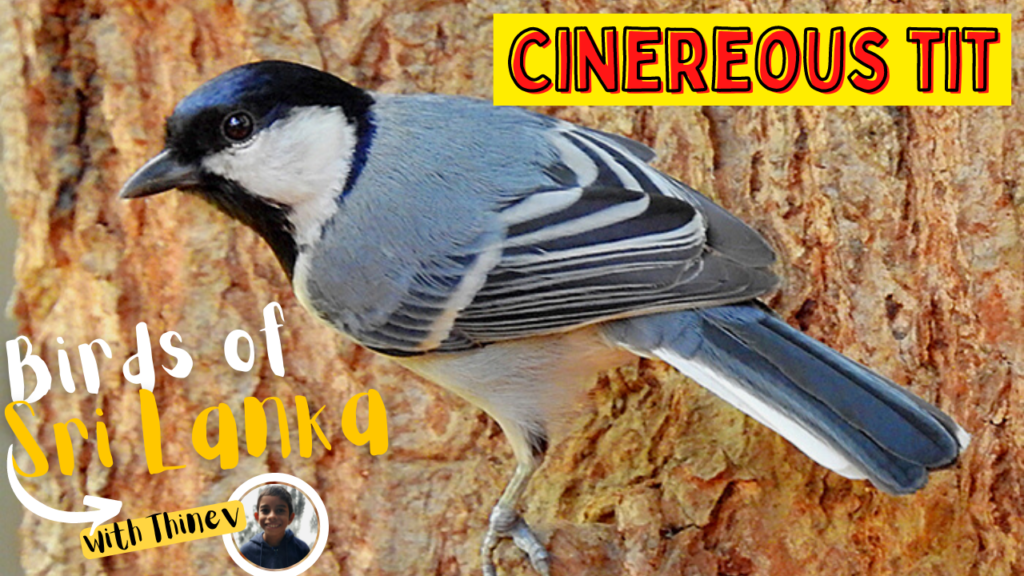
CINEREOUS TIT | අළු ටිකිරිත්තා, මහ ටිකිරිත්තා
LOCAL NAMES
- Alu tikiriththa, Maha Tikiriththa, අළු ටිකිරිත්තා, මහ ටිකිරිත්තා, ভদৰকলি, বড় তিত, રાખોડી રામચકલી, રામચકલી, रामगंगारा, बल्गुली, टोपीवाला, राखी रामगंगारा, चिचिल्कोटे, सट्वा, भस्म बल्गुली, சாம்பற் சிட்டு
- Assamese ভদৰকলি
- Chinese (SIM) 苍背山雀
- Czech sýkora popelavá
- Dutch Grijze Koolmees
- English Cinereous Tit
- English (Bangladesh) Cinereous Tit (Asian Great Tit)
- English (India) Cinereous Tit (Great Tit)
- English (United States) Cinereous Tit
- French Mésange indienne
- French (French Guiana) Mésange indienne
- German Graukohlmeise
- Hebrew ירגזי אפרפר
- Hindi सलेटी रामरंगरा
- Indonesian Gelatik-batu kelabu
- Japanese クロシジュウカラ
- Malayalam ചാരമരപ്പൊട്ടൻ
- Marathi राखी वल्गुली
- Norwegian gråkjøttmeis
- Persian چرخ ریسک بزرگ شرقی
- Polish bogatka orientalna
- Russian Серая синица
- Serbian Pepeljasta velika senica
- Slovak sýkorka šedivá
- Spanish Carbonero Indio
- Spanish (Spain) Carbonero indio
- Swedish grå talgoxe
- Thai นกติ๊ดหลังเทา
- Turkish Hindistan Baştankarası
- Ukrainian Синиця південноазійська
DESCRIPTION
Parus cinereus, These birds are grey backed with white undersides. The distribution of this species extends from parts of West Asia across South Asia and into Southeast Asia. Males and females have a white cheek patch, a gray back, and a white wingbar. The female has a narrower central line on its underparts and is slightly duller overall. Very active; feeds at the middle and upper-strata of forests and woodlands and in gardens and cultivated areas, but avoids dense forests. Their sounds calls are like … Both parents take part in incubation and hissing from within the nest when threatened. They sometimes make use of old nests of a woodpecker or barbets. Locally named Alu tikiriththa.